Dork's festival guide features are here to showcase some of the best and brightest acts you can check out at this summer's festivals. From big names to emerging talents, we'll make sure you miss nothing.
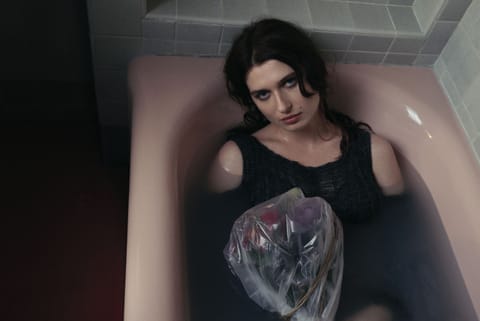
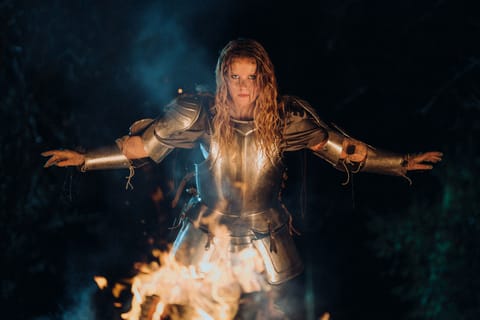
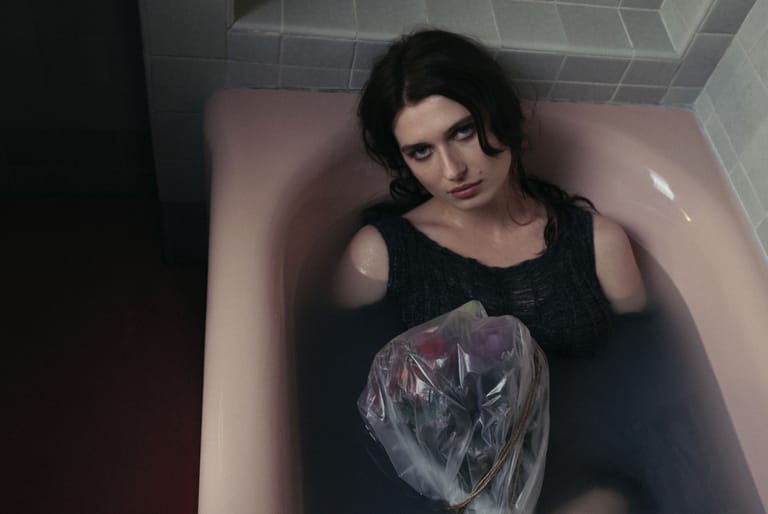
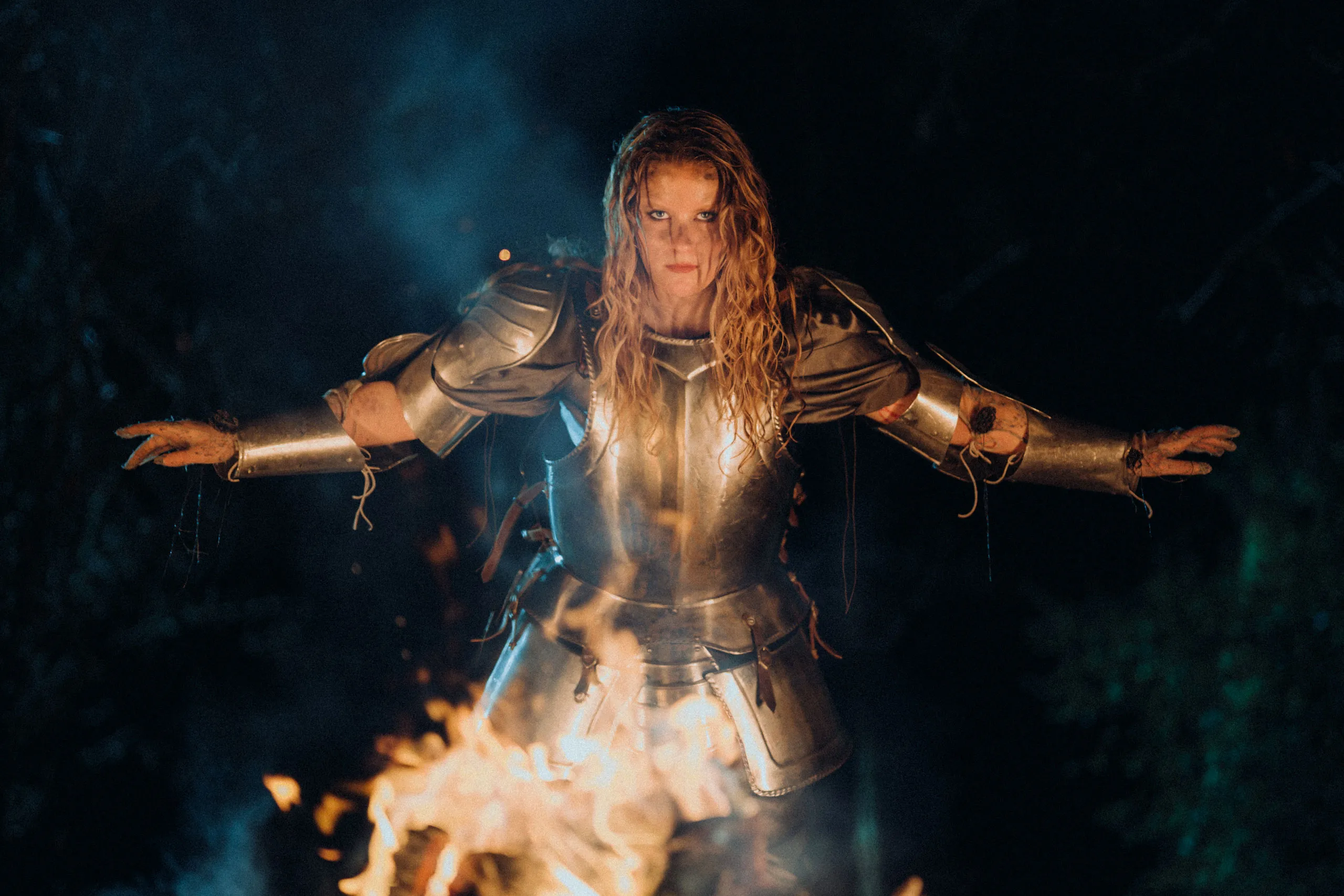
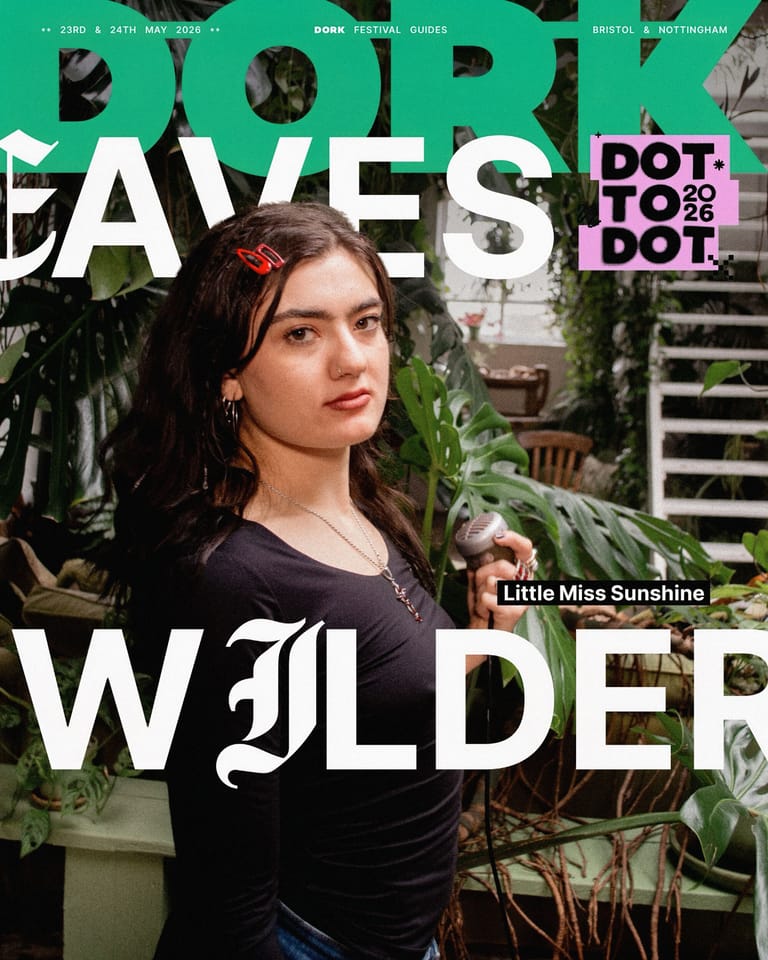
Eaves Wilder is in rehearsal mode when we catch her - or, more accurately, in pre-rehearsal damage control. “Today I've taken over the house, cos I've got the band coming over in about an hour for practise,” she says. “So I'm setting up all our gear, sending pre-apology texts to my neighbours, and getting us ready to play a festival up north tomorrow!”
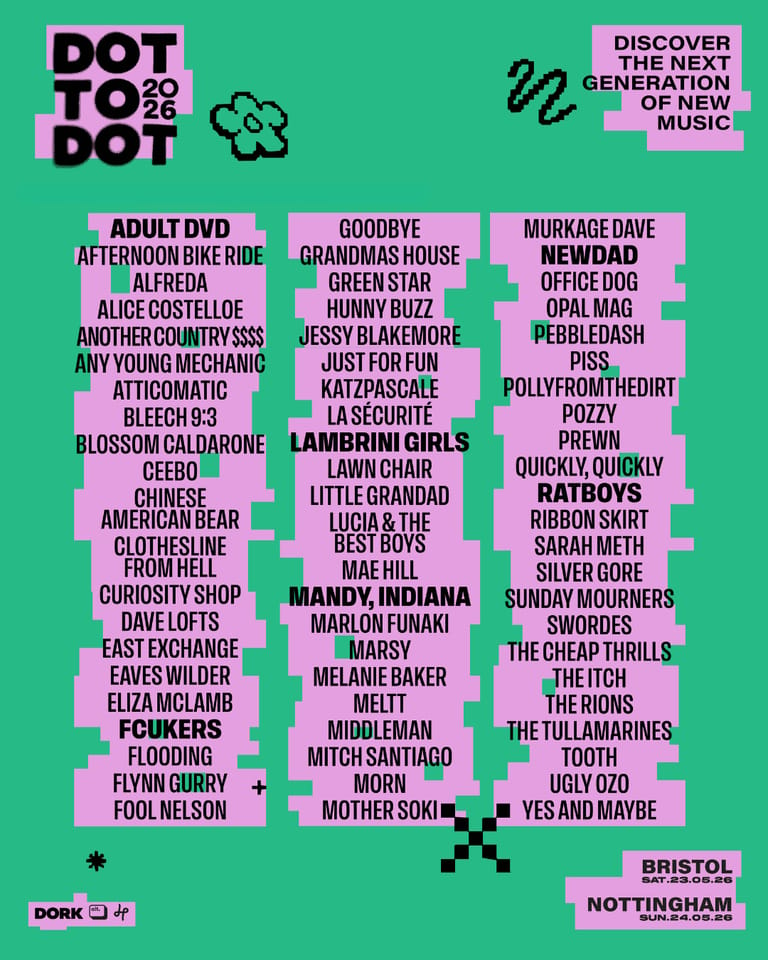
Her debut album ‘Little Miss Sunshine’ is finally out, there’s a full summer of festivals ahead, and she’s about to take those songs properly on the road - including a slot at Dot To Dot, which has just announced its latest wave of artists. Things are moving quickly, but getting here took a bit of a reset.
Before making the record, Wilder stepped away from music entirely. It wasn’t a strategic move so much as a necessary one. “I questioned myself about literally everything,” she says. “Why am I doing this? What do I like? What do I want? What excites me and that makes me bored?”
That uncertainty pushed her close to quitting altogether, but it ultimately cleared space for something more focused. “Getting to the point where I thought I was gonna quit and that I had run out of music and things to say, was actually really good,” she explains. “Kind of every delusion I had was shattered, and it meant that what I started making, I was really only making for me.”
That mindset carried into the way ‘Little Miss Sunshine’ came together. Early on, she set herself a list of rules: practical, slightly obsessive, and deliberately limiting. “I wrote a little manifesto of rules that were important to me,” she says. Every song needed a middle eight. They had to stand up against the music she already loved. “There must be as many riffs as I can write.” No shortcuts. “Stop caring what people are gonna think.” Even the less obvious details mattered: “I wanted piano on every song, which there is even if you can't hear it.”
Within that structure, though, the ambition was anything but small. “I really like music that feels elemental. And takes you out of your body,” she says. “The first time I listened to ‘Alive’ by Pearl Jam, I was up a mountain, and I wanted to make songs that would fit on a mountain.”
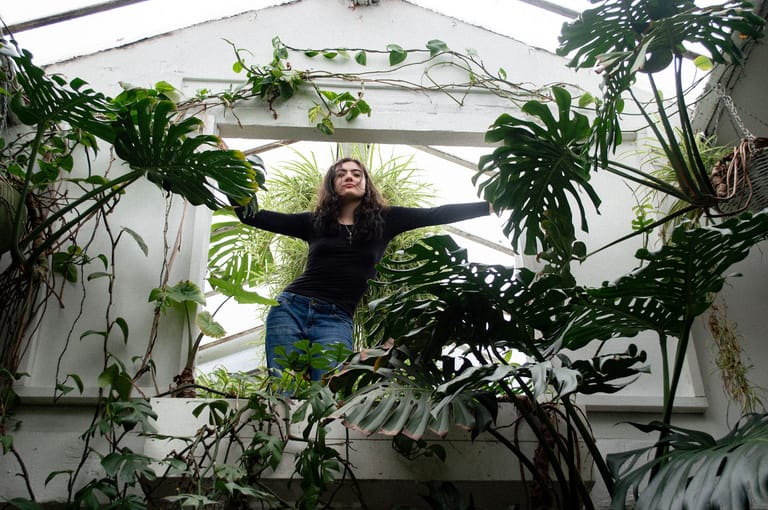
That idea of scale runs throughout the record, but it comes from a very specific place. “I was definitely feeling really small in my life,” she says. “And it's funny, as a girl I think you spend your whole life trying to find ways to be smaller, but when it comes to music that's where I can be absolutely huge.” In that sense, ‘Little Miss Sunshine’ isn’t about escapism so much as it is about permission. “You’re not really confined to your body anymore, you can just be a thing,” she says. “A mountain, or the sky, or a tree, anything that knew its purpose and was allowed to just exist.”
It’s also something she’s seen play out in real time. Watching PJ Harvey live, she found herself more drawn to the crowd than the stage. “I was watching this one girl in the audience who was my age,” she says. “She was not in her body any more – she was just bouncing and screaming and feeling all of it.” That moment stuck. “I don’t think I had realised so viscerally that women actually do yearn to feel big,” she adds. “And it’s really powerful to be able to hand over that freedom to the listener if it becomes a song that allows them to feel that way.”
"I don’t think I had realised so viscerally that women actually do yearn to feel big"
— Eaves Wilder
‘Hurricane Girl’, which opens the album, serves as an entry point into that world. “It feels like a character introduction,” Wilder says. “Even from the way each instrument is introduced one at a time.” It’s also the only track written from a slight distance. “It’s kind of the only song in third person, so I think of it as like introducing the way the world views this character,” she explains, “and the rest of the album is more about the interior of her and why she behaves that way.” Musically, it sets the tone: “It’s just as heavy as it is dreamy - that’s the balance I tried to strike for the record.”
The same mix shows up in her influences. There’s a clear through-line from Jane’s Addiction and Alanis Morissette to Cocteau Twins and Pearl Jam, but she’s just as interested in texture and production. “I used a lot of breakbeats and synths and pads,” she says. “I think anything that sounds cinematic.”
At the same time, she’s paying attention to what her peers are doing, especially artists who don’t seem overly concerned with fitting into anything. “Wet Leg and CMAT really inspire me,” she says. “They don’t seem restricted to me. It looks like both of those acts are doing exactly what they want.” That truthfulness is what sticks. “I cry whenever I see CMAT for some reason,” she adds. “You can just see how much she means it.”
That kind of directness carries into her own writing. Across ‘Little Miss Sunshine’, there’s a willingness to be messy and contradictory - things she feels aren’t always afforded to women in music. “It’s really important to me that women are allowed to be unlikable and immature, and dark, and contradictory just like male musicians are,” she says, pointing to the writers she admires most: those whose lyrics are “just as self-deprecating and funny as they are extremely powerful and clever.”
Making the record also changed how she understands herself. “I got diagnosed with ADHD and a massive hormone imbalance,” she says. “Which really heavily changed how I view myself and how much freedom and patience I started giving myself.” It also reframed how she works. “Nothing is as important as workflow and just getting the ideas out,” she explains. That immediacy is still in the final record, with some of the original shed recordings left untouched. “You can't recreate them often.”
For all the thought that went into it, though, she tried not to overthink how it might land. “I made such a conscious effort not to think at all about how it would be received,” she says. “I just hope it’s good-surprising.”
"You’re not really confined to your body anymore, you can just be a thing"
— Eaves Wilder
Now, those songs are heading into the spaces they were built for. Dot To Dot, which returns to Bristol and Nottingham this May, is one of them - a multi-venue festival known for spotlighting emerging artists alongside more established names. Wilder’s part of that mix, and she’s already got plans beyond her own set. “I’m definitely gonna catch Alfreda,” she says. “I have been meaning to go to one of her shows for years. It looks mental in the best way possible.”
It’s that kind of environment, full of discovery, where things tend to connect. “Most bands I have fallen in love with, there was definitely a moment where it clicked live,” she says. “I think that's the final piece of the puzzle when you really love a band.” She still remembers seeing Sharon Van Etten and Father John Misty at Green Man and how that translated into something longer-lasting. “Those two have influenced me massively,” she says.
Despite everything changing, she’s still approaching festivals the same way she always has. “I attend as many as I possibly can as a fan,” she says. “That’s what I’ve always done.” Which means when she steps on stage this summer, she has a pretty clear idea of what she wants to give people. “Lots of melodies, riffs, fuzz, sunshine, dreamy, rocky.”
As for the album itself, she’s keeping expectations simple. “Just to check out 'Little Miss Sunshine',” she says. “I can’t believe it’s now out!!! I still currently really like it, so I hope by the time this comes out I'm still blasting it on my speakers somewhere.”
It’s not a bad place to land.
Eaves Wilder's album 'Little Miss Sunshine' is out now. Dot to Dot will take place on 23rd and 24th May; visit dottodotfestival.co.uk for more information.