Upset is Dork's go-to playlist for the best new heavy music, where urgent guitars and boundary-pushing bands meet moments that hit hard.
You must chase the wires back to the wall to fully comprehend the significance of Basement's fifth album.
'WIRED' is the follow-up to their one (and only) major label release, 'Beside Myself'. That backing was potentially game-changing for a band who had grown an underground following that stretched well beyond the boundaries of Ipswich. With the full weight of that machinery behind them, there was a lot of extra noise.
There was a collective feeling within the band that they needed to create "hits." The idea went against everything they'd ever done; Basement write albums, and whatever songs become popular emerge over time and touring.
"We just felt a lot of pressure, and I'm sure some of that was laid on from the label, either deliberately or not, but the pressure and the noise mean that you don't do what you are supposed to do," Andrew Fisher explains.
It wasn't that they were explicitly being told what to do. The label's presence had a more insidious effect; a low hum of expectation that quietly distorted everything. "They hype you up so much," he says, "and then when it comes out, and it doesn't live up to the expectation that they force on you…" he begins and trails off.
"I try to be as level-headed as possible. I convinced myself that I didn't care, but because I did and it didn't hit like they said it was gonna do, those voices stop blowing smoke and drift into the background." A beat. "Then they dropped us."
'Beside Myself' was not a bad album. But it was their most compromised, and the experience of making and releasing it left wounds that took years to properly examine.
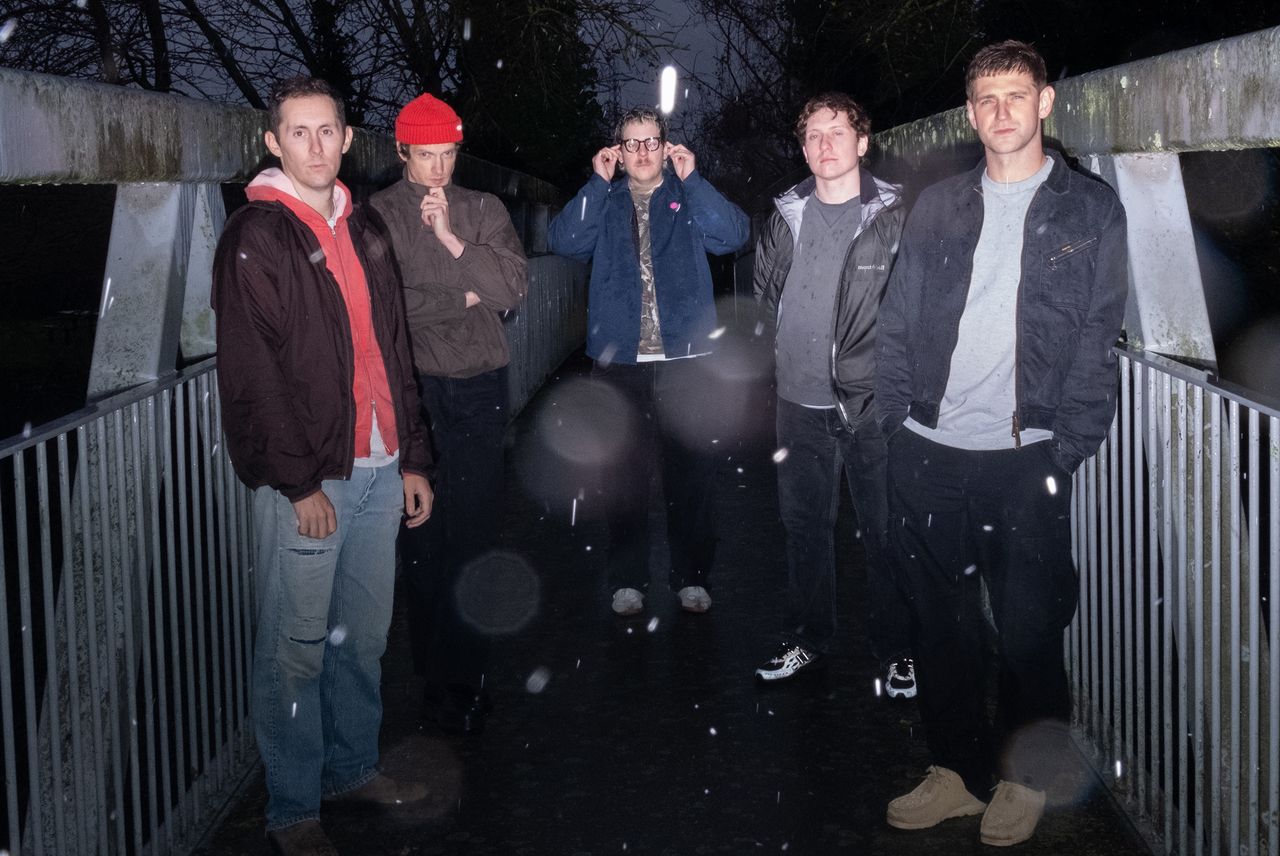
They took a break. Then the pandemic came, and the break calcified into something harder to name. Each member quietly interrogated whether the band should even continue. For guitarist Alex Henery, the answer was starting to feel like no. According to Andrew, "[Alex] didn't like how things had ended up. He didn't feel connected to the band. He doesn't like loose ends, and he really just wanted, for his life, for his mental health, a clean break."
Andrew wouldn't allow it. Alex tested the band's strength, and it sparked a pivotal conversation. "I always knew we'd do something, but we just needed to come at it all in our own time," he reasons.
What followed over the next few years were the kinds of honest, uncomfortable conversations most bands never manage to have.
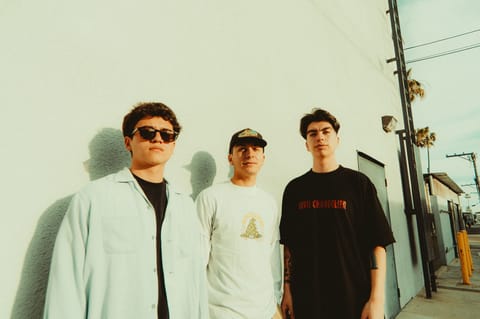
As such, Basement remain the same five friends that started out in 2009. Andrew and Alex with fellow guitarist Ronan, Duncan on bass and James on drums. Andrew is adamant that won't change.
"We've done so much work on our relationship as five people. That took time, conversations, vulnerability and opening up to the point that we are now," he explains.
They needed to each understand their value to Basement and to one another. They'd grown up together, changed individually, but not taken a moment to reassess what that meant for them as a collective.
"We were literally kids when we started," Andrew says as he reflects on how they used to talk to one another. Anger would build sometimes. Maybe they would argue, but Andrew admits that confrontation is hard for him, so instead he would harbour resentment. But now they are having the hard conversations, and it's working.
"We've all been to therapy. We've all worked on ourselves, and that's really helped. I'm proud of how we talk to each other now, how we look out for each other and have the best intentions for each other," he concludes.
Coming to terms with what happened on 'Beside Myself' was part of that process. For Andrew, the reckoning was specific: he had to accept that he cared about the outside noise, about what people thought and stop pretending otherwise.
"I think there's a difference between pretending you don't care and accepting you care but not letting it get in the way. That meant we were able to do what we just did, which was really filter out all the noise and just write music like we did when we first started, when there was no outside noise because no one knew who we were and no one cared."
"I feel like this is a new chapter… what happens next, we'll find out"
— Andrew Fisher
They got to work. And this time, the producer they'd always wanted was available. John Congleton's credits and his Grammy award tell one story. The way Andrew talks about him tells another. "He doesn't care about perfection. He doesn't care about performance. He wants to find the moment where it almost feels like the wheels are falling off and capture that. That was the mission. That was the focus: not to be perfect."
Basement had tried to work with him on 'Beside Myself', but their schedules hadn't aligned. They were, however (as Andrew puts it), "on the major label train" at the time, and it couldn't be slowed down for anyone.
This time, they were squirrelled away together in the Animal Rites studio in Los Angeles. They handed their producer a simple brief. "We wanted dynamics in everything," Andrew says. "We wanted it to be all over the place." They spent the session pursuing the ideas that shone the brightest, stripping back pre-production arrangements to their most essential form, checking egos at the door. James had spent months building out drum parts that John reduced to almost nothing. And he was right every time.
The magic was often instantaneous. Andrew describes a moment during the recording of 'Deadweight', a song Ronan felt was crying out for a synth sound. John had an idea. He crossed the room to his entire wall of outboard gear. He tweaked something. Pressed something down. "When we heard it, we all just burst out laughing because it was incredible," Andrew says. "It was like he pulled it out of his head and went and did it," he adds, shaking his head, still delighted by the memory.
For Andrew personally, working with John meant confronting something he'd been quietly avoiding. "I've gone off how my voice sounds when it's pushed when it's more distorted… like screaming or whatever," he admits. "So I'm constantly trying to not do that."
But take after take, whenever he let himself go, the room would light up.
He had planned not to do any aggressive vocals on 'Sever', which, after some persuasion from John, became one of their most direct and confrontational moments. John told him to go back in and do it from the gut. That became the take.
"I just needed to try what I wanted to do and have a reaction and have people direct me," Andrew recalls. "I wouldn't have been able to do that five years ago. I would have been too insecure. Maybe a little too stubborn but also too insecure to take feedback and direction to that degree."
That openness extends to the songwriting, too. When he settled into writing his usual "deep, self-reflective, maybe self-deprecating" approach, Ronan was there to pull him up. He asked Andrew whether he'd ever tried looking at the other side: at the work he'd done, the confidence he'd earned. It was hard for Andrew, but Ronan had every faith in his friend.
"There is a lot of that on this record," he says. "Just trying to feel comfortable, accepting that I can be confident. That's something I still struggle with. I very much struggle with that." But, ultimately, figuring out that struggle is intrinsically entwined with what being creative is all about for him. "This is how I try and work things out," Andrew adds. "How I work on myself is through this whole music thing."
This journey and that growth are what have led us to 'WIRED'. It is a defiant and defining return for Basement. Sonically, it is rich with 90s influence from their more shoegaze moments to the slacker pop joy of 'The Way I Feel' and the grungy parting shot of 'Summer's End' where Andrew seems at his most assured. Opener 'Time Waster' builds and drops like a rollercoaster, 'Deadweight' races out of the blocks but then chugs and churns into a sludgy chorus, while 'Broken By Design' is sunlit and gorgeous but is immediately shattered again by 'Pick Up The Pieces'.
The album gives you whiplash and that is entirely the point.
On that track, 'Pick Up The Pieces,' Andrew sings, "Compromise is suicide / We must create or die." Whether or not it was intended as a mission statement, it functions as one; a line that makes the entire journey from 'Beside Myself' to here feel suddenly, completely legible.
It feels less like experimentation than affirmation; quintessentially Basement, but growing in confidence right up to the final line, when Andrew questions, "Are you listening now?"
Ultimately, there is a fragility to Basement that has always been part of their appeal; an awareness that it could all end, each record could be their last. They have been on hiatus. They have been through the major label machine and come out the other side changed. They are still here, five friends who have chosen, repeatedly and at some cost, to keep going. Asked whether, if this were somehow their last record, he would feel satisfied with what had been said on 'Wired', Andrew doesn't hesitate.
"Yes," he says and smiles. "And I think that's the first time I can say that."
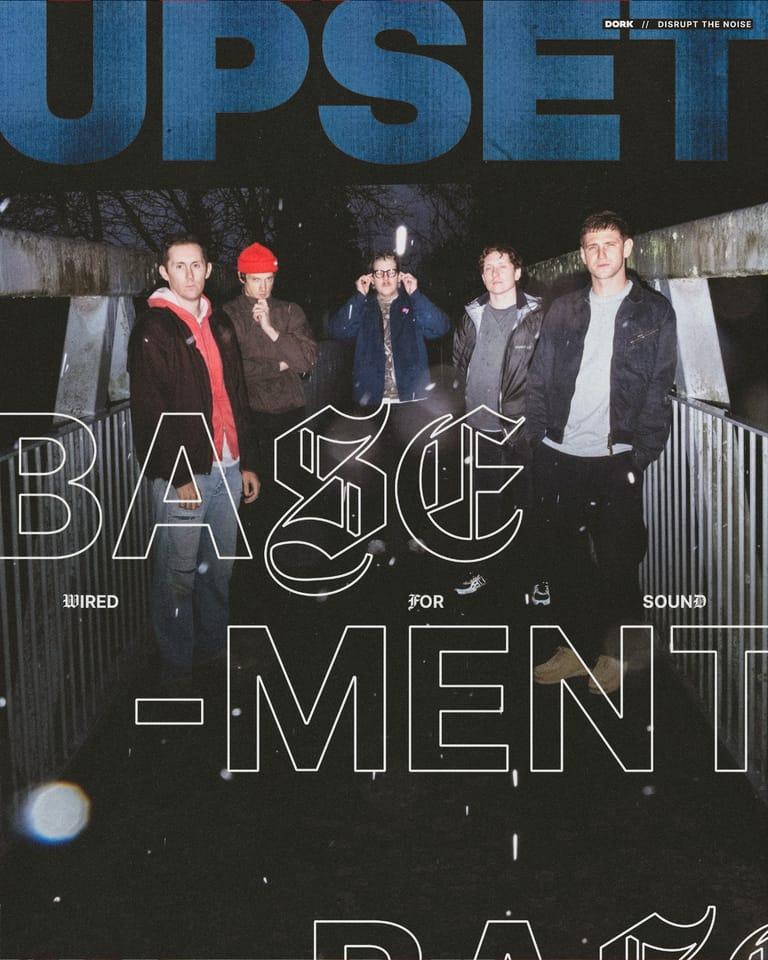
Taken from the June 2026 issue of Dork. Basement's album 'WIRED' is out now.